
How Do You Tell Someone Their Loved One Has Died?
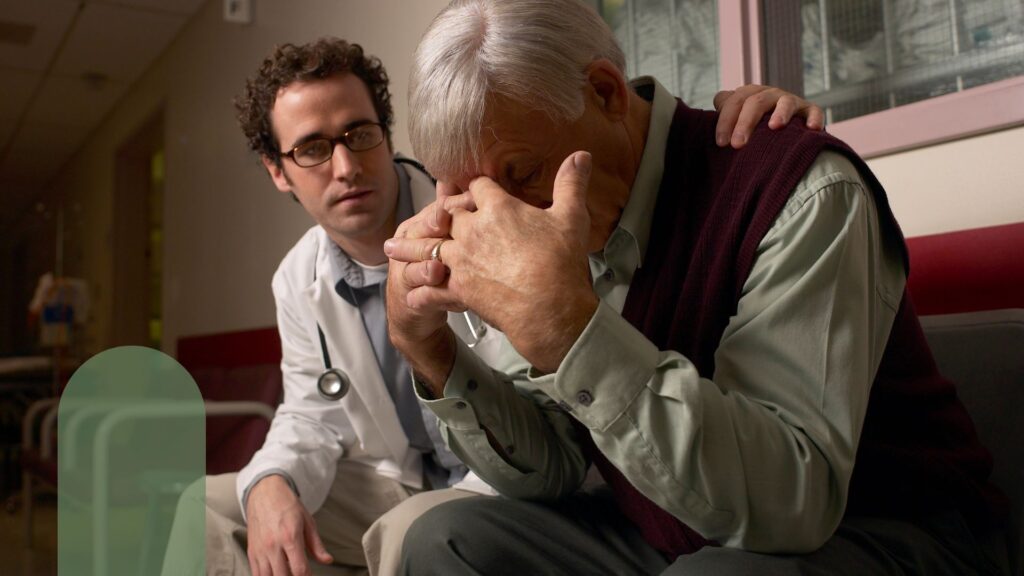
There are moments in life where words carry more weight than usual. This is one of them. You may be standing at a front door, in a hospital room, or next to a scene that has not yet settled. You know something they do not. And in a few seconds, their world is going to change. There is no perfect way to do this. You cannot remove the pain. But you can carry the moment in a way that is clear, steady, and human. Present, aware, and precise.
Your goal is simple: tell the truth clearly, stay present, don’t complicate it.
Why is this so difficult?
This moment is difficult because two realities collide at the same time.
First, there is the reality of what has happened.
Someone has died. If you were on scene, you may have seen it, heard it, or carried the pressure of trying to save a life. That does not just disappear. It stays with you, even if you push it down. There will be time for you to prosses your own feelings as well
Second, there is the reality of the interaction. You are about to step into someone else’s life at the worst possible moment. You are not just delivering information. You are becoming part of a moment they will never forget. And you are doing this in a situation you cannot control. There may be multiple people, strong emotions, confusion, and unpredictable reactions. You are not stepping into a calm conversation. You are stepping into a human moment under pressure.
What do you say?
When the moment comes, clarity matters. Use direct, plain language. Do not soften the truth or hide behind vague phrases. But do not say it like a script either. Say it as a person who understands the weight of what they are saying.
“I’m so sorry. I have very difficult news. [Name] died.”
Then stop talking.
This is where many people struggle. There is a pull to explain, to soften, or to keep speaking to ease the tension. But this moment is not helped by more words. Clear does not mean cold. And compassionate does not mean long. Expect a reaction. You cannot control it. People respond to shock in different ways. Your role is not to manage their reaction, but to make space for it. That is why you stop talking.
What happens next?
People will react differently. Some will cry immediately. Others will freeze. Some may deny what you said or ask you to repeat it. Stay steady, but not emotionless. If they ask again, repeat the same words: “I’m so sorry. [Name] died.”
Do not soften it the second time.
Repeating does not mean they did not hear you or do not understand.
It is often part of how people begin to process what has happened.
How do you handle their reaction?
You are not there to control the reaction. You are there to anchor the moment. Simple presence matters more than perfect words. “I’m here.” Or “You’re not alone.”
If needed, help them sit down. Stay close enough to be present, but do not overwhelm them. Do not rush out of the moment. Silence is not awkward here. It is necessary.
Being present in silence often communicates more than any explanation. At the same time, remain aware of your surroundings. Your safety also matters in this interaction. Strong reactions can include anger or loss of control. If someone begins to escalate, create space. Just because you are delivering the news does not mean you must accept abuse. If the situation becomes unsafe, take steps to protect yourself and others.
What if they ask questions?
After the initial shock, questions often come. People are trying to make sense of what has just happened. Answer only what you know.
“What I can tell you is…”
“I don’t have all the details yet.”
Do not guess. Do not fill gaps. Clarity helps. Wrong information harms. Honesty, even when limited, builds trust.
What if children are present?
Children will pick up that something is wrong, even if no one explains it. Ignoring them or trying to hide everything can increase confusion and fear. They should not automatically be excluded. They also need to begin processing what has happened, in a way that fits their age.
Start by reading the room.
If a parent or stable adult is present, let them lead where possible. A simple question can help: “Would you like the children to be here, or would you prefer someone take them to another room?”
In many cases, parents will remove children before the news is given. In other situations, especially when the event was sudden or traumatic, children may need to remain and be part of the moment. If no clear direction is given, use judgement.
Pay attention to:
- The child’s age
- Whether they are already aware something is wrong
- The emotional state of the adults
If children are present when the news is given, adjust how you speak:
- Use clear, simple language
- Avoid phrases like “gone” or “lost”
- Use the word “died,” but say it gently
For younger children, keep it short and concrete. For older children or teenagers, you can be slightly more direct, but still measured. Do not give long explanations. Let the family continue the conversation afterwards.
Also watch what happens after the news is given. Children often look to adults to understand how to respond. If no one is able to support the children, make sure there is at least one stable adult who can stay with them. Sometimes you may need to gently make a parent aware of how the children are responding, especially if the adults are overwhelmed.
You can also ask if there is someone they trust who can come and support the children, so the adults have space to begin processing what has happened.
There is no perfect way to handle this. Your role is to stay aware, respect the family, and help create a moment that is clear, not confusing.
What if multiple family members are present?
When several people are present, the moment can become more complex very quickly.
Your role is to stay clear and steady.
Deliver the message in a way that everyone can hear and understand.
Do not split the message or have multiple side conversations while giving the news.
After the news is given, stay aware of how the group is responding.
Pay attention to:
- Who is becoming overwhelmed
- Who is escalating emotionally
- Who is more stable and able to support others
If possible, anchor yourself near the more stable person. They can help support the rest of the group.
Avoid getting pulled in different directions. You cannot manage every individual at the same time.
How long do you stay?
In those first minutes, your presence helps stabilise the moment. Stay long enough for the initial shock to settle slightly. Do not rush away, but also do not stay in a way that becomes intrusive. Before you leave, make sure they are not completely alone if they are vulnerable. Help them contact someone if needed This is not about doing more.
It is about staying long enough to matter.
What should you avoid?
In an effort to help, people often say too much or say the wrong things.
Avoid phrases like:
“At least…”
“They are in a better place”
“God needed another angel”
These may be well intentioned, but in the moment they can feel dismissive. Do not try to fix the situation. Do not over-explain. Short. Clear. Present. Human.
When to get more help
Sometimes the reaction goes beyond what can be held in the moment. In the hours and days that follow, some people begin to stabilise. Others struggle to process what has happened. Look out for signs that additional support may be needed:
- Ongoing panic or severe anxiety
- Emotional shutdown or numbness that does not lift
- Intense anger that does not settle
- Withdrawal from others or complete isolation
- Thoughts of self-harm
In these cases, support is part of the process.
At Stronghold Counselling, we often work with people in the aftermath of these moments. Not just the loss itself, but the shock of how it was received, what was said, and how it was experienced in those first hours. Early support can help prevent people from getting stuck in that moment. For yourself or loved ones.